Red Light Therapy: Benefits, History, And How It Works
Unlocking the Science and Benefits Behind This Revolutionary Treatment
If your Instagram and social media feeds are full of glowing red face masks and other red light devices, you are not alone. Red light therapy has been a growing trend and it seems like everyone is obsessed with its benefits - and for good reason. From improving facial imperfections to stimulating hair growth and optimizing muscle recovery, people can’t seem to get enough of this powerful wellness tool.
You may be wondering how red light therapy works. Does exposing the skin to red light actually help treat skin conditions? Does it help reduce pain? Does it help increase blood flow and reduce inflammation?
Before we dive into the science, let’s open up our history books, shall we?
Early Light Therapy Treatment for Lupus
Following Edison’s incandescent light bulb, Danish physician, Niels Ryberg Finsen, started working with light to study its effects on living organisms. In 1896, Dr. Finsen developed the first light therapy as a treatment for lupus vulgaris, a type of tuberculosis. Using electric light concentrated 15 times, he could treat an area of affected skin 2cm in diameter. His treatment sessions were daily and lasted two hours, but the treatments were successful in clearing lesions from the disease. He built a center where he treated 804 patients, and many saw positive results. In 1903, Dr. Finsen was awarded the Nobel Prize in Physiology for his light therapy treatments.
Introduction of the Laser
Now with electric light and greater means of manipulating light, the laser followed. In 1917, Albert Einstein theorized the foundational properties of the laser, or “light amplification by stimulated emission of radiation.” While the theory had existed since 1917, the first laser wasn’t developed with Einstein’s theory until 1960. Engineer and physicist Theodore H. Maiman developed the first laser with his team in 1960, which introduced the world to coherent light. In a laser, the light is emitted at a consistent wavelength, which allows the light to be focused in a tight beam. Lasers have a variety of clinical uses with concentrated coherent light, and therapeutic applications could now be more targeted and customized to the patient.
Low-Level Laser Therapy
Hungarian physician, Endre Mester, developed the first low-level laser therapy device in 1967 and tested its effects on skin cancer. He later used the device to show the effects of laser light on wound healing processes. The FDA first approved a low-level laser therapy device in 2002. (1)
How fascinating is that?! Okay, let’s take a deep dive into how it actually works!
Understanding Red Light Therapy
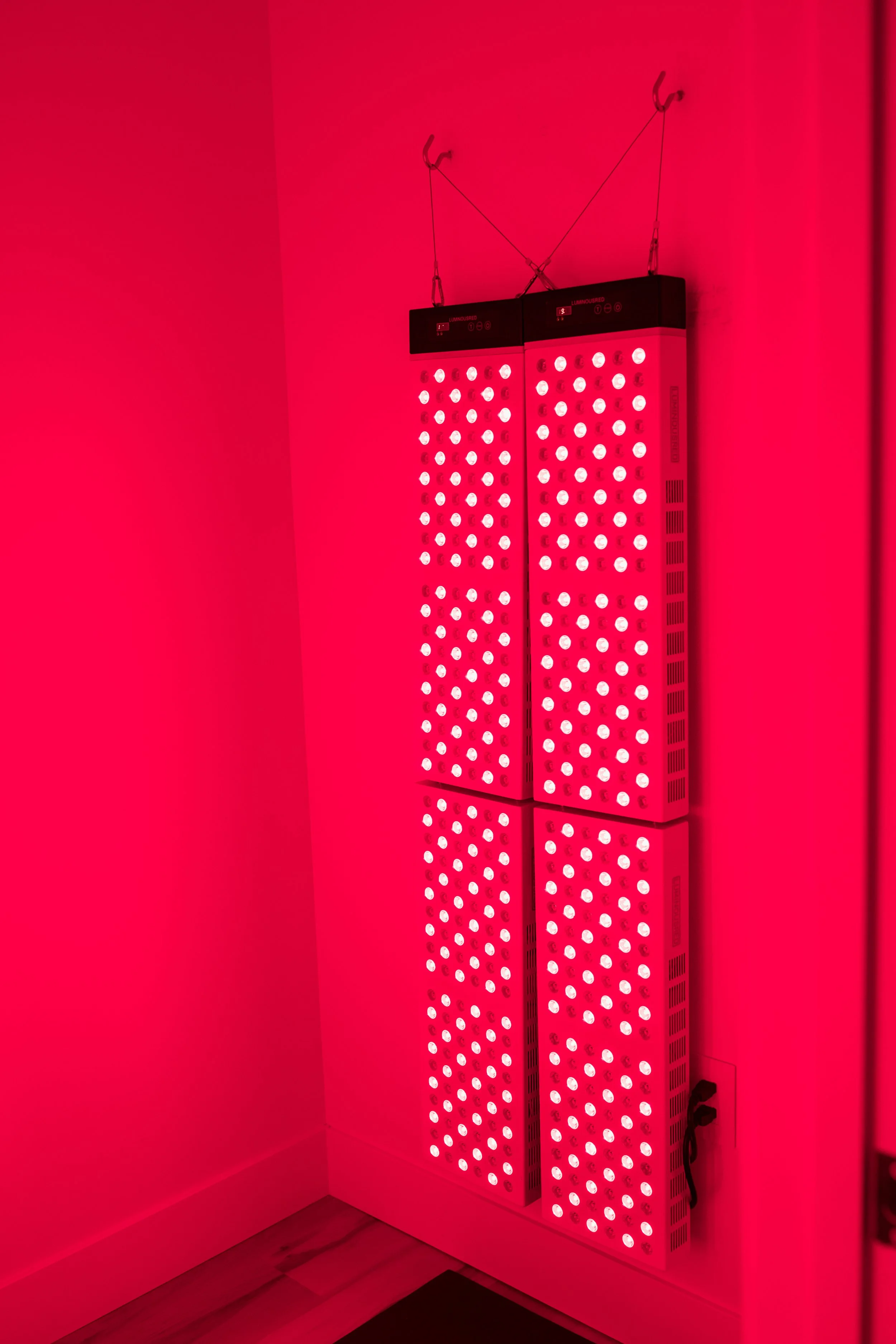
Red light therapy, also known as low-level laser therapy (LLLT) or photobiomodulation (PBM), involves exposing the body to red or near-infrared light wavelengths. These wavelengths penetrate the skin, reaching deep into the cellular level, where they stimulate various biological processes to support healing to your cell core: the mitochondria. The mitochondria, or powerhouse of the cell, drives your cellular energy and enhances it’s ability to heal and function optimally.
Red light has wavelengths between 620 to 750 nm (nanometers), according to the National Center for Atmospheric Research. This is visible light. Near-infrared light, which is a longer wavelength light (up to 1,200 nm), is also used in specific treatment plans and is available in our infrared saunas. While this light may appear red, in reality, infrared light is not visible, and instead heats the body from within to drive physiological changes.
When photons (particles of light) are placed near the skin they enter the tissues and activate chromophores (a part of a molecule that gives it its color), which triggers changes in the cells, according to the American Society for Laser Medicine & Surgery. In addition, red light therapy also affects the mitochondria (the powerhouse of cells) generating ATP (energy) to promote healing. (2)
Now for the fun part, let’s talk about the benefits.

9 Benefits of Red Light Therapy
1. Skin Rejuvenation and Collagen Production
One of the most celebrated benefits of red light therapy is its ability to promote glowing skin and collagen production. What woman wouldn’t want that?! By stimulating fibroblast cells, which are responsible for producing collagen and elastin, red light therapy helps improve skin tone, texture, and elasticity. This can lead to a reduction in wrinkles, fine lines, and other signs of aging — leaving the skin looking more youthful and radiant. Hello J-Lo.
2. Pain Relief and Inflammation Reduction
Red light therapy has been shown to have analgesic (pain-relieving) and anti-inflammatory effects, making it a valuable tool for managing chronic pain conditions such as arthritis, fibromyalgia, and back pain. By increasing blood flow and reducing inflammation, red light therapy can help alleviate discomfort and promote faster healing of injured tissues.
3. Muscle Recovery and Performance Enhancement
Athletes and fitness enthusiasts alike have embraced red light therapy for its ability to accelerate muscle recovery and enhance athletic performance. By stimulating mitochondrial function and increasing ATP production (the energy currency of cells), red light therapy helps muscles recover more quickly from intense workouts and can reduce the risk of injury. Additionally, it can improve muscle strength, endurance, and overall physical performance. Maybe red light is what kept Tom Brady in the game so long.
4. Joint Health and Mobility Improvement
For clients dealing with joint pain or stiffness, red light therapy offers a gentle and effective solution. By reducing inflammation and promoting tissue repair, it can help improve joint mobility and flexibility, making daily activities more comfortable and enjoyable. Whether you’re managing arthritis, tendonitis, or general wear and tear, red light therapy can provide relief and support joint health. Your Grandma Barb would love this!
5. Wound Healing and Tissue Regeneration
Red light therapy has been extensively studied for its role in wound healing and tissue regeneration. By stimulating the production of growth factors and accelerating cellular repair processes, it can help wounds heal faster and reduce the risk of infection. This makes it particularly beneficial for clients recovering from surgery, injuries, or chronic wounds.
6. Mood Enhancement and Mental Well-being
Beyond its physical benefits, red light therapy has been shown to have positive effects on mood and mental well-being. By increasing the production of serotonin and endorphins (the body’s natural feel-good chemicals), it can help alleviate symptoms of depression, anxiety, and seasonal affective disorder (SAD). Additionally, it may improve sleep quality and overall emotional resilience, leading to a greater sense of vitality and happiness.
7. Hair Growth and Scalp Health
For those struggling with thinning hair, hair loss, clogged shower drains and late night calls to your plumber - red light therapy offers a promising solution. By stimulating blood flow to the scalp and promoting the proliferation of hair follicle cells, it can help improve scalp health by reducing inflammation, balancing oil production, and preventing dandruff and other scalp conditions. So think about hanging up those hats, ladies!

8. Enhanced Cognitive Function and Brain Health
Emerging research suggests that red light therapy may have neuroprotective effects, benefiting cognitive function and brain health. By increasing cerebral blood flow and promoting the production of neurotrophic factors, it can support cognitive performance, memory retention, and overall brain function. This makes it a potential adjunctive therapy for conditions such as Alzheimer’s disease, traumatic brain injury, and age-related cognitive decline.
9. Immune System Support and Disease Prevention
Red light therapy has been shown to modulate immune function, helping to regulate the body’s inflammatory response and enhance immune surveillance. By reducing chronic inflammation and oxidative stress, it can support immune system health and reduce the risk of chronic diseases such as cardiovascular disease, diabetes, and even cancer. Additionally, red light therapy may help improve immune function in clients with autoimmune disorders or compromised immune systems.
Conclusion
As we relax under the warm glow of red light, it quickly becomes clear that its benefits go far beyond the surface. From supporting skin health and muscle recovery to encouraging relaxation and overall well-being, red light therapy offers a simple and restorative addition to a wellness routine.
At Golden Hour Wellness, our mission is delivering you sunshine all year round. Our space is designed to help you slow down, reset, and care for your body in a way that feels intentional and restorative.
Many of our clients love incorporating red light therapy into their weekly rhythm. Some come in looking to support their skin, others for relaxation after a busy week, and many simply enjoy the calm and quiet time it provides.
Red light therapy is gentle, comfortable, and easy to add into your routine. Sessions are quick, relaxing, and designed to help you leave feeling refreshed and restored.
Whether you are looking to support healthy skin, unwind after a long day, or simply take a few minutes for yourself, red light therapy can be a meaningful part of your wellness routine.
A little sunshine for your body.
A little calm for your soul.
That is the Golden Hour Wellness way.
Sources:
PubMed Article on Light Therapy: